Training · Guide
How to become a bodyguard
Most people who want to become a bodyguard picture the moment of action. The job is mostly planning, waiting and driving, done properly every single day. This guide explains what the work really is, what you need in the UK and in Nigeria, and the first steps to take from where you stand now.
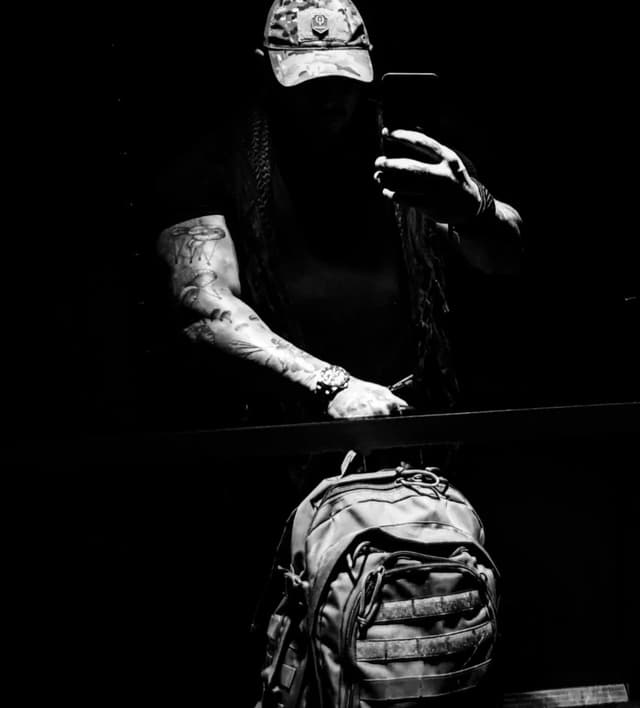
- 20+ yearsin close protection
- Former ParaBritish Army
- Started on the doorlike many of us
- Free to registerwith our network
What does a bodyguard actually do?
A bodyguard, or close protection officer, keeps one person safe: the principal. Sometimes it is a family, sometimes an executive, an artist or a public figure. The aim is simple. Nothing happens to them, and most days nobody notices you were needed.
That result comes from work done before anyone leaves the house. You check the route, the venue, the timings and the exits. You know where the nearest good hospital is and what you will do if the road is blocked. This is called advance work, and it is most of the job.
Then there is the waiting. Outside a meeting room, in a hotel corridor, in a car park at two in the morning. You stay alert the whole time, because the one moment you switch off is the moment that counts. A lot of the job is also driving, or working closely with the driver, because the car is where clients spend much of their day.
A good bodyguard is calm, polite and easy to forget until the moment you need them. You can read more about a normal working day in our guide to what to expect as a close protection officer.
Which skills matter most?
Titles and certificates get you looked at. Character and habits keep you in work. These are the things we look for in every person we put next to a client.
- Discipline. You turn up early, briefed and ready, every time.
- Discretion. You never post a client, a location or a plan.
- Awareness. You read people and places and notice what is out of place.
- Planning. You think through the day before it happens, and you write it down.
- Calm. You keep your voice down and solve problems before they grow.
- Communication. You brief clearly, report honestly and listen to the team.
- First aid. You can keep someone alive until help arrives.
- Driving. You can drive smoothly and safely, and you know the city.
How do you become a bodyguard in the UK?
In the UK, close protection is regulated by the Security Industry Authority (SIA). If you guard people against assault or injury as part of a contract for services, for example through a security company, you need an SIA close protection licence. Working without one when you need one may be breaking the law.
To hold any front line SIA licence you must be 18 or over, pass an identity check, pass a criminal record check, have the right to work in the UK and hold the SIA recognised licence-linked qualification. The application fee is £204, and licences last three years.
The qualification is the Level 3 Certificate for Close Protection Operatives Working in the Private Security Industry. The SIA lists the course at 194 hours over 18 days, with or without self-study, and you must take it with an approved training provider. It includes physical intervention training and terror threat content.
Before you start that course, you need a first aid qualification at level 3 or above, such as Level 3 First Aid at Work, First Person on Scene or First Response Emergency Care. Your provider checks it, and it must be valid for at least another 12 months.
A criminal record does not automatically stop you. The SIA looks at whether your offences are relevant to security work, how recent they are and what sentence you received. You must tell them about any outstanding charges. If you have spent six continuous months or more outside the UK in the last ten years, you will need an overseas criminal record check for each country you lived in.
Since 1 April 2026, you also need a refresher qualification to renew a close protection licence, with a valid level 3 first aid certificate before you take it. Plan for that every three years.
Now the honest part. A licence lets you work. It does not get you work. Plenty of people pass the course and then struggle to find a first job. Teams hire people they trust, usually people someone already knows. Experience on the door, in the forces or in the police helps, and so does a clean, honest CV and a good reputation from your last job. Rules change, so check the current SIA guidance on gov.uk before you pay for any course.
How do you become a bodyguard in Nigeria?
Private guard companies in Nigeria are governed by the Private Guard Companies Act, first passed in 1986. A 2007 amendment to the NSCDC Act gave the Nigeria Security and Civil Defence Corps the job of licensing, supervising and monitoring these companies, with the power to seal up any firm that works without a valid licence.
For you, that means one practical thing. Work through a properly licensed company, and check that it holds a valid licence before you take a job with it. A firm that works without one puts you at risk as well as the client.
Private guard companies in Nigeria are not allowed to bear arms, and the NSCDC has warned licensed companies against it. A private bodyguard in Nigeria does not carry a gun. Since November 2025, police officers have been withdrawn from VIP protection, and the federal government has told VIPs to request armed protection from the NSCDC instead. Where a job needs armed cover, it comes from a lawful state source, and the private team plans and leads the movement around it. Our guide to armed escorts in Nigeria explains how that works.
So the skills that get you work in Nigeria are the unarmed ones: planning, driving, local knowledge, calm and discretion. Knowing Lagos traffic, the airport arrival routine and which roads to avoid after dark is worth more to a client than a big frame. If you want to work with us in Nigeria, see bodyguard jobs in Nigeria.
Can a bouncer become a bodyguard?
Yes, and many good protection officers started exactly there. Ricky, who leads our team, started on the door before he moved into close protection. The door teaches you to read a crowd, spot trouble early and stay calm when nobody else is.
But they are different jobs, and the change is in the mindset as much as the skills. On the door you protect a venue, control access at one entrance and react to incidents as they happen. In close protection you protect a person, plan routes and venues ahead, prevent problems through awareness and move with the client, often in another city or country.
The habits that have to go are the ones that work on the door: standing out, raising your voice, getting physical first. The habits that have to come are planning, quiet presence and patience.
Fitness, driving and languages
Fitness is not about looking big. It is about long days on your feet, carrying kit, climbing stairs at speed and still thinking clearly at the end of a fourteen hour day. Train strength, conditioning and endurance, and keep it up between jobs.
Get a full driving licence and drive a lot. A security driver who is smooth, early and never lost is worth a great deal to a team. Advanced or security driver training is a strong addition once you have the basics. Our page on the security driver role shows what clients expect.
Languages open doors. English is the working language on most international teams. In Nigeria, Yoruba, Hausa, Igbo or Pidgin helps you read a situation and talk to people on the ground. French and Arabic are useful for work across Africa and the Gulf.
Your first steps
If you are starting today, this is the order we would do it in.
- Be honest with yourself about your record, your fitness and why you want this job.
- Get a level 3 first aid qualification and keep it current.
- Get a full driving licence and as many hours behind the wheel as you can.
- Get experience in security work, such as door supervision or event security.
- Learn what the job really is before you spend money on a licence course.
- In the UK, take the SIA licence-linked qualification with an approved provider and apply for your licence.
- In Nigeria, look for work with a properly licensed guard company.
- Build a short, honest CV and collect references from people who have seen you work.
- Register with networks that place protection officers, and keep your details up to date.
How our course and network fit in
We wrote the Blackwolf Academy courses for people making this move. Fundamentals starts from zero: what close protection really is, conduct, getting into the industry, situational awareness, advance work, vehicles, first response, the law on force, fitness and working in Nigeria and across Africa. The later courses cover your first years on a team, leading a detail and running protection at the highest level. They are PDFs you keep, written by Ricky, a former British Paratrooper with more than twenty years in close protection, and the Blackwolf team.
The courses are not a licence and they do not replace practical training. They build the knowledge, judgement and habits behind the job, so you walk into a licence course or your first team already knowing what good looks like. If you are in Nigeria, our page on bodyguard training in Nigeria explains what the course covers for you.
When you are ready to work, register with our network. It is free and takes about fifteen minutes. When a client needs protection in your city, the people in our database are the first we contact. If you live in Nigeria, start with bodyguard jobs in Nigeria, and see how we work across the country on our Nigeria page.
See the coursesRegister with our networkBodyguard jobs in Nigeria
Questions people ask us
How long does it take to become a bodyguard?
In the UK, the licence-linked close protection course runs over 18 days, and you need a level 3 first aid qualification first. Then the SIA processes your application, and they cannot say exactly how long that takes. Getting your first real job usually takes longer than getting the licence.
Do I need an SIA licence to be a bodyguard?
In the UK you need an SIA close protection licence if you work under a contract for services, for example through a security company. The rules are on gov.uk. Outside the UK, the rules of the country where you work apply.
Can I become a bodyguard with a criminal record?
In the UK, possibly. The SIA says a record does not automatically stop you and looks at how relevant and how recent the offences are. Whatever country you are in, be honest about it. We can work with a past. We cannot work with a lie.
Do bodyguards carry guns in Nigeria?
No. Private guard companies in Nigeria are not allowed to bear arms. Where a job needs armed cover, it comes from a lawful state source, and the private team plans the movement around it.
Do I need military or police experience?
It helps, but it is not the only way in. Door supervisors, event security staff and disciplined martial artists also make the move. What matters is discipline, honesty, fitness and a willingness to learn the job properly.
Is your online course a licence?
No. Licensing differs from country to country, and no online course replaces it. Our courses teach the knowledge and judgement behind the job and how to get started properly.
How do I get work with Blackwolf?
Register for free on our join page. It takes about fifteen minutes. Our team reviews every profile, and when a client needs protection in your city, we contact the database first.
Where to go next
Start where you are.
Learn the job properly, then register with us. When work comes up in your city, we call the people we know.